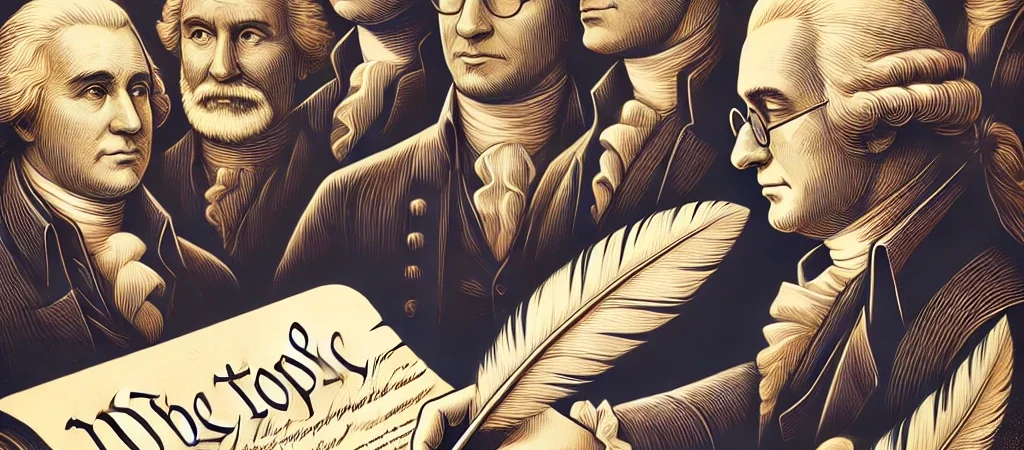
The United States Constitution stands as one of the most revered documents in history, laying out the framework of the American government. Interestingly, the very first article of this powerful document is devoted entirely to Congress, the legislative branch. But why did the framers choose to give Congress this prime position? The answer lies in their vision of democracy, where the voice of the people would be heard through elected representatives. Article I isn’t just a legal formality—it’s a testament to the foundational role of Congress in the American political system.
Article I is extensive, divided into ten detailed sections that meticulously explain how the legislative branch should function. The first section vests all legislative power in Congress, composed of the House of Representatives and the Senate. Following sections define the makeup, duties, and terms of both houses, while Section 8 outlines specific powers—often called the “enumerated powers.” These include taxation, regulating commerce, declaring war, and maintaining the armed forces. Notably, the “Necessary and Proper Clause” gives Congress flexibility to enact laws essential to carrying out its responsibilities.
The framers intentionally designed a bicameral legislature. The House of Representatives, with members elected every two years, would reflect the will of the people, while the Senate, offering equal representation to each state, would provide stability and protect smaller states’ interests. This balanced design was a critical component of the Constitutional Convention’s Great Compromise.
One of the most important features of Article I is the enumeration of powers. By clearly listing what Congress could do, the framers aimed to both empower and limit the legislature. These powers allowed Congress to manage national finances, oversee trade, and provide national defense. At the same time, Sections 9 and 10 introduced crucial limitations, ensuring that Congress would operate within a constitutional framework.
So why was Congress listed first? Historically, the framers were wary of centralized executive power. Memories of the British monarchy’s overreach were still fresh. The legislative branch, in contrast, was seen as a direct expression of the people’s will. In giving Congress the first and longest article of the Constitution, the framers were signaling its preeminent role in the government they were creating.
James Madison, often referred to as the Father of the Constitution, articulated this clearly in The Federalist Papers. In Federalist No. 51, he emphasized the need for checks and balances but also acknowledged the natural dominance of the legislative branch due to its close connection to the public. The framers believed that if any branch should have more influence, it should be the one most accountable to the people.
Over time, however, this balance has shifted. The rise of the modern presidency, judicial activism, and increasing political polarization have all impacted Congress’s role. Despite these changes, Congress remains an essential component of governance. It controls the federal budget, has the power to declare war, and is tasked with lawmaking—a process that directly affects every American citizen.
Every major law, from civil rights protections to healthcare reform, begins in Congress. Elected officials introduce bills, debate their merits, and vote on their passage. This process reflects the core democratic principle that the people, through their representatives, should shape the laws that govern them.
Today, Congress faces several challenges. Political gridlock often delays legislation. Public trust in the institution has declined, and the influence of special interests complicates transparent lawmaking. These issues highlight the need for reform, civic engagement, and a recommitment to the constitutional principles laid out in Article I.
Despite its flaws, Congress continues to serve as a vital connection between the government and the people. Its structure ensures both responsiveness and stability. The House allows for frequent electoral feedback, while the Senate provides continuity. This dual system reinforces accountability and adaptability—two key ingredients for effective governance.
Modern governance still has much to learn from Article I. It reminds us that a powerful, representative legislature is essential for a functioning democracy. Congress is not just a policymaking body; it is a guardian of the people’s voice. Understanding its powers, limits, and duties helps ensure informed civic participation and governmental transparency.
Education plays a crucial role here. Civics classes that focus on the Constitution and Article I specifically empower citizens with the knowledge they need to be active participants in democracy. This knowledge is the first step in holding elected officials accountable and ensuring that government remains “of the people, by the people, for the people.”
In conclusion, Article I remains a cornerstone of American democracy. By placing Congress at the forefront of the Constitution, the framers emphasized their belief in representative government. Although the dynamics of power have evolved, the legislative branch remains the engine of lawmaking and public accountability. In a world of shifting political landscapes, Article I stands firm as a reminder that the true power of government begins with the people.